
 English
 中文简体
Content
- 1 What Is Driving Functional Fabric Innovation Right Now?
- 2 5 Trends Defining Functional Fabric Innovation in 2026
- 2.1 Recycled Feedstocks Move from a Marketing Line to a Standard Spec
- 2.2 Four-Way Stretch Becomes Table Stakes
- 2.3 Multi-Protection Finishes Are a Cost Decision, Not a Feature List
- 2.4 Temperature Regulation Expands beyond the Outdoor Core
- 2.5 Antibacterial, Recovery, and Easy-Care Features Extend the Use Cycle
- 3 How to Verify a Functional Fabric Trend Before You Commit
- 4 From Sample Yardage to 16 Million Meters of Annual Capacity
- 5 Functional Fabric Innovation: FAQ for Fabric Buyers
At the 2026 trade fairs in Munich and Shanghai, the shift in functional fabric innovation was visible on sample boards before any sales conversation started. Recycled polyester content occupied the top line of spec sheets. Four-way stretch appeared as the default, not a premium upgrade. Water-column numbers sat next to UPF ratings and anti-wrinkle notes on the same yardage. Inside the production facility that prepared this trend review, those board signals match what buyers actually request: more functional combinations, tighter delivery dates, and the same target price.
This article explains the five trends that matter for the 2026 buying cycle, how to verify them before you place a bulk order, and why a mill's equipment base decides whether a new fabric can scale beyond the sample room.
In 2026, recycled content, four-way stretch, and combined finishes belong on the same side of the sample card. A fabric card that lists only one function tells you the development team has not read the market.
What Is Driving Functional Fabric Innovation Right Now?
The driver of functional fabric innovation today is cost pressure across the garment supply chain, not the search for a single miracle fibre. Brands need to cut the number of layers in a garment while keeping the same protective performance, which pushes mills to combine functions in one woven textile. Retailers and regulation ask for recycled content and certified chemistry. Fabric margins stay thin, so mills consolidate finishing steps. At the same time, buyers inspect whether the claimed function survives 30 wash cycles, which raises the bar for finish quality.
The priorities that land on a fabric supplier's desk are consistent across categories:
- Multi-season garments that reduce SKU counts
- Retailer and regulatory pressure for certified raw materials
- Finishing cost control inside the mill
- Verification of function after repeated washing
Functional fabric innovation, in supplier terms, is the repeatable combination of yarn, structure, and finishing that delivers two or more verified performance properties in one woven textile. If a mill cannot reproduce the result on its own factory floor, it is a sample-room artifact, not a usable innovation.
Traditional logic
One function per face fabric, an extra lining layer, limited elastic recovery, finish verified by the sample card.
2026 logic
Stacked functions on one face fabric, fewer SKUs, recovery tested at the sample stage, wash durability written into the acceptance criteria.
5 Trends Defining Functional Fabric Innovation in 2026
The five trends that matter for the 2026 buying cycle are the ones that change what a supplier must hold in stock, in test data, and in finishing capacity.
Recycled Feedstocks Move from a Marketing Line to a Standard Spec
Recycled polyester and recycled nylon are now written into the spec block, not only into the brand story. The practical impact shows up in dyeing. Recycled yarn absorbs dye slightly differently, so deep shades and high fastness requirements need adjusted recipes and tight tolerance between lots. Buyers should specify the certification scheme and the accepted color deviation from the start.
Four-Way Stretch Becomes Table Stakes
Whether a fabric stretches no longer decides a purchase; how well it recovers does. Elastic recovery of at least 85 percent is the informal cutoff used in many bulk approvals. The woven stretch range now runs from ski pants to golf trousers and running joggers, which shows how far four-way stretch has moved into mainstream categories.
In the golf trouser range, the EF002 article combines 4-way stretch, waterproof protection, and UV resistance in one construction.
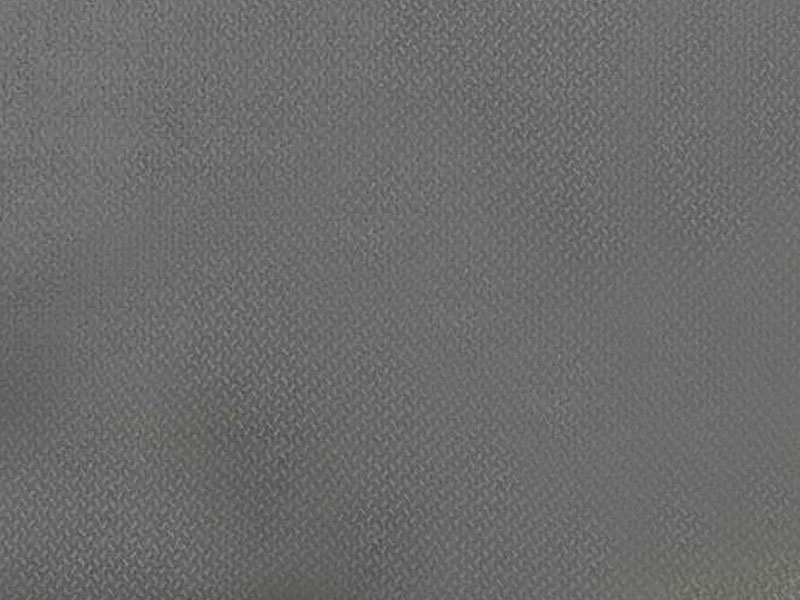 EF002 4-way Stretch Waterproof / UV Protection Golf pants fabricArt No : EF002 Fabric Description : labyrinth Weight : 138GSM Fiber Content : 93%P+7%/SP Yarn Size / Count : 75D+40D*75D+40D+75D 86T*120T Width : 57" 4-way Stretch Wat...View Product →
For the sourcing team, this means testing recovery at the sample stage, not just measuring initial elongation.
Multi-Protection Finishes Are a Cost Decision, Not a Feature List
Windproof, water repellent, anti-wrinkle, and UV protection no longer arrive as separate line items on a purchase order; they sit on the same face fabric. The hidden benefit is warehouse simplification. One article replaces three SKUs, and the garment factory cuts assembly steps for lining and lamination.
For climbing outer layers, a shell that combines 4-way stretch, windproof protection, and anti-wrinkle behavior keeps a single jacket practical from the approach hike to the belay ledge. The PE313 article is one current production example.
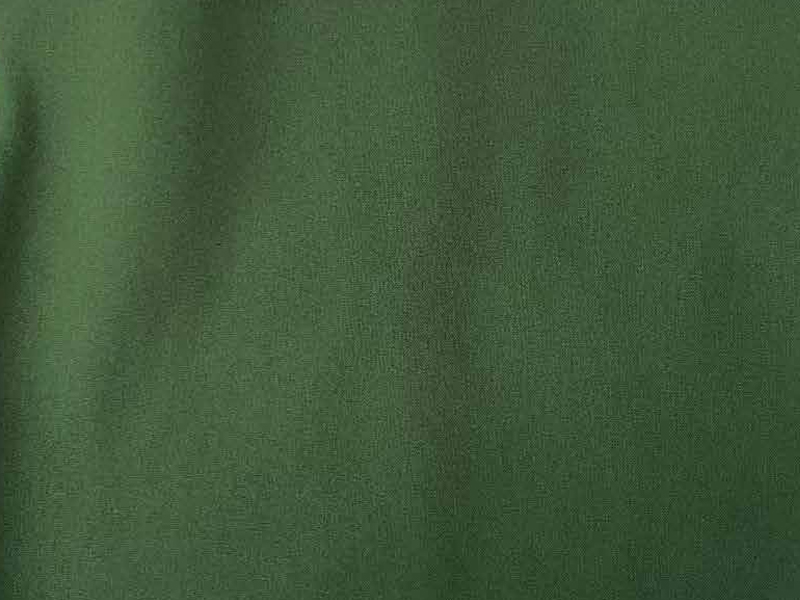 PE313 4-Way Stretch Anti-wrinkle/Windproof Climbing jackets fabricsArt No : PE313 Fabric Description : Four-way stretch+TPU+fleece Weight : 310GSM Fiber Content : 97%P+3%SP Yarn Size/Count : 100D+30D*100D+30D 116*91 Width : 57"58" 4-W...View Product →
Temperature Regulation Expands beyond the Outdoor Core
Cool-touch contact and thermal-protection finishes are moving from alpine gear into city wear and light uniforms. In fishing and beach shirts, cool-feeling contact can close a summer order. The supply-side consequence is that a mill can run the same base weave with two different temperature-management finishes, which shortens reorder lead time.
Functional complexity by end-use category
Illustrative index based on the number of functional properties commonly stacked in each category during mill development discussions. Climbing outer layers demand the broadest balance of stretch, tear resistance, windproofing, and water repellency.
If a supplier lists five functions on a sample card but cannot show elastic recovery and wash fastness data side by side, treat the sample as a development starting point, not a finished spec.
Antibacterial, Recovery, and Easy-Care Features Extend the Use Cycle
The 2026 measure of a functional fabric is how long the function survives repeated wear and washing. Antibacterial finishing, shape recovery, and easy care are the three properties that buyers check after the twentieth wash.
In mountaineering layers, the AB015 polyester four-way stretch fabric carries antibacterial and cross-stretch properties in the weave, so the garment stays fresher across repeated ascents.
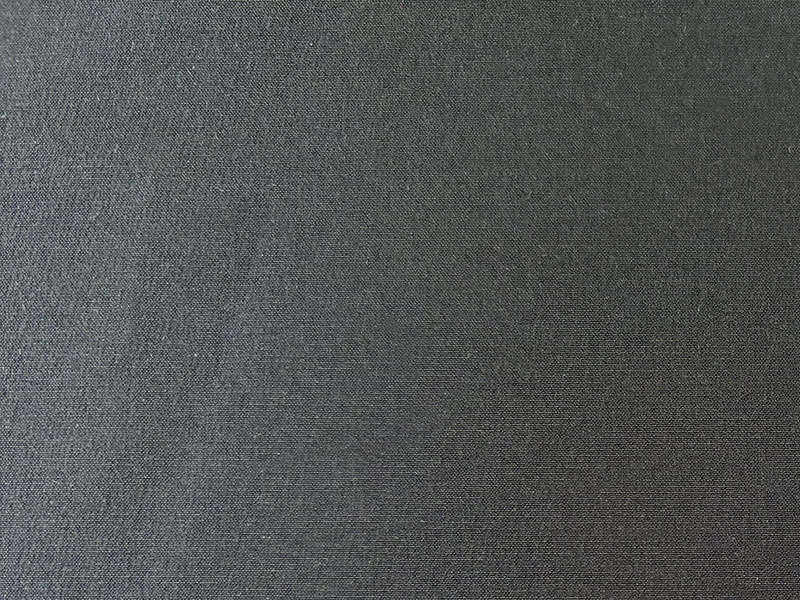 AB015 Polyester Stretch Mountaineering Fabric (Cross-Stretch Antibacterial)Ait No: AB015 Fabric Description: Point Wicking Antibacterial Mountaineering Fabric Fiber Content: 90% Polyester 10% Spandex Yarn Size/Count: 75D/72F+40D*75D/72F+40D+1...View Product →
How to Verify a Functional Fabric Trend Before You Commit
Verify in this order: certification, lab data, small-batch trial, then scale-up approval. Many development requests start with a sample card and a claimed set of numbers. The problem is that a two-meter sample hides dye-lot inconsistencies, finishing delamination, and sewing issues. A structured verification process separates a genuine fabric innovation from a finishing experiment.
| Method | What it confirms | What it does not confirm |
| Certification audit | Chemical safety, social compliance, recycled content traceability | Physical performance in the field |
| In-house lab report | Tear strength, water column, UPF, air permeability | Batch-to-batch stability under production conditions |
| Small-batch trial | Garment sewability, hand feel, color yield in dyeing | Finish behavior after 20 industrial washes |
| Wear test | Thermal comfort and fit during actual activity | Tensile or abrasion values in controlled lab conditions |
One wash-cycle rule: if water repellency or elasticity drops noticeably before 20 industrial washes, the fabric is still a coating with a schedule, not a finished innovation.
From Sample Yardage to 16 Million Meters of Annual Capacity
The real bottleneck in functional fabric innovation is reproducible output, and that is decided by the mill's equipment base. Green Textile & Galaxy Textile Co., Ltd., founded in 2006 in the historical silk capital of Wujiang, operates its production subsidiary Wujiang Galaxy Textile Co., Ltd. The factory covers more than 6,000 square meters and runs more than 280 hydraulic looms with reed widths from 190 to 230 centimeters. Annual capacity exceeds 16 million meters.
Sales and showroom offices in Shanghai, Guangzhou, and Bangladesh keep the sourcing channel close to major garment manufacturing clusters. From a two-meter development sample to a full production lot, the same weaving and finishing chain remains in control. This is the practical side of functional fabric innovation: a trend becomes a purchase decision only when it scales.
A close look at the factory floor shows how looms, finishing, and quality checks line up for a mixed program of stretch, outdoor, and easy-care constructions.
If you want to test a 2026 functional fabric trend, send the specification you actually need, including GSM, stretch rate, UPF level, and finish set, and ask for a development quote.
A mill that weaves and finishes under one roof answers faster and with fewer variables. That is why the equipment base decides which fabric trends scale.
Functional Fabric Innovation: FAQ for Fabric Buyers
What counts as functional fabric innovation in 2026?
A fabric qualifies as innovative when it combines two or more verified performance properties, such as stretch, water repellency, UV protection, antibacterial behavior, and temperature regulation, in a construction that can be reproduced at bulk scale and holds its function after repeated washing.
Does four-way stretch still cost more than basic woven polyamide?
The premium over basic woven polyamide has narrowed because stretch yarns and looms are widely available. The real cost difference sits in elastic recovery, dyeing conditions, and finish durability. A low-priced stretch fabric can fail the 20-wash recovery test and become the expensive option across the product lifecycle.
How do I verify recycled content in a functional fabric order?
Ask for certification from a recognized scheme and check that the certificate covers the specific lot number. Also compare the color depth between virgin and recycled lots; deep shades may require a recipe adjustment before bulk production.
What is the minimum development quantity for a custom stretch fabric?
Development quantity depends on reed width, weave structure, and the number of finishing passes. A mill with in-house looms and finishing can usually quote a realistic development roll after receiving the target GSM, stretch rate, and performance requirements. A clear specification is the fastest way to shorten the development loop.
Functional fabric innovation scales only when the mill can weave it, finish it, and prove it. A clear specification shortens the development loop more than any other factor.