
 English
 中文简体
中文简体Content
- 1 The Custom Fabric Development Process: From Design Requirement to Finished Roll
- 2 What Design Parameters Do We Need From You?
- 3 Production Capabilities That Make Custom Fabric Development Reliable
- 4 How We Engineer Functionality Into Custom Fabrics
- 5 Sample Development, Testing, and Bulk Delivery Timeline
- 6 Custom Fabric Development: Frequently Asked Questions
The Custom Fabric Development Process: From Design Requirement to Finished Roll
Custom fabric development is the process of turning a buyer's design specification into a woven, finished fabric through controlled stages of yarn selection, weaving, finishing, and validation. The project runs as a linear sequence of five stages, and each stage ends with a deliverable that the buyer approves before the next one starts.
The five stages look like this in practice:
- Requirement analysis - we document weight, width, hand feel, elasticity, colorfastness, and end-use conditions in a specification sheet.
- Material selection - we choose the yarn system, typically polyester, nylon, polyester-spandex, or nylon-spandex, based on the performance target.
- Weaving - we draft the weave structure, prepare the loom, and weave first trial yardage on a 190-230 cm loom.
- Finishing and dyeing - the fabric is dyed, functional finishes are applied, and dimensional stability is set.
- Validation - lab tests, shade approval, and hand-feel sign-off decide whether the sample moves to bulk production.
Each stage has one responsible contact on our side, so you always know who owns the current step. When you approve a deliverable, we move immediately; when you request a change, we feed it back through the same sequence.
What Design Parameters Do We Need From You?
The precision of your original specification decides how many development rounds your project needs. A complete brief typically cuts sampling iterations by at least one round, which also shortens the total timeline.
Send us a physical sample, and our R&D team reverse-engineers the yarn count, weave density, and finishing recipe. Send only a sketch or a competitor reference, and we build the structure from scratch. Either way, we fill out the same core parameters:
| Parameter | What it controls | Typical working range |
| Fabric weight | Hand feel, opacity, drape | 60-320 gsm |
| Finished width | Cutting efficiency, seam placement | 190-230 cm |
| Stretch and recovery | Fit, comfort, shape retention | 15-30% four-way |
| Color and fastness | Appearance durability | AATCC 3-4 wash and light |
| Functional finish | End-use performance | C6 DWR, PU coating, UV, anti-static |
The more precisely you describe the end use, the shorter the list of viable structures becomes. A climbing jacket shell needs tear resistance as a base; a running short needs stretch and moisture management first. When we know the garment, we can eliminate unsuitable constructions before the first sample is woven.
Production Capabilities That Make Custom Fabric Development Reliable
A mill that weaves in-house controls cost, lead time, and quality in a way that a trading company cannot. Our own production base is what makes custom development dependable rather than experimental.
This scale matters for two reasons. First, it lets our R&D and weaving teams reserve trial slots for new constructions without stalling existing bulk orders. Second, the machine settings used for an approved sample transfer directly to full production, so bulk fabric matches the sample in look, hand feel, and physical performance.
Working with an integrated mill gives you practical advantages that become obvious during a development program:
- In-house weaving and finishing under one roof, with no subcontracting gap between sample and bulk.
- Direct control over yarn sourcing, so raw material quality stays consistent across iterations.
- Sample lab reports issued with every trial yardage, not after the final approval.
- Production slots reserved for approved custom designs before you place the final order.
How We Engineer Functionality Into Custom Fabrics
Functionality is not an after-treatment. In custom development, it is engineered simultaneously through yarn chemistry, weave geometry, and finishing formulations. Changing any one of the three changes the final performance.
We usually start from a functional target and work backward:
- Four-way stretch - spandex core yarns combined with high-elasticity weave structures deliver 15-30% elongation in both warp and weft directions.
- UV protection - high-filament-count yarns plus UV-absorbing finishing allow lightweight styles to reach UPF 50+.
- Water repellency - C6 DWR or PU coatings are applied without sealing the fabric surface, so breathability is preserved.
- Moisture management - hydrophilic finishes and engineered filament cross-sections move sweat away from the skin and dry quickly.
For golf trousers, a typical brief combines several functions in one cloth: stretch for comfort, water resistance for morning dew, and UV protection for a full round in the sun. Our EF002 golf trousers fabric was developed exactly this way and remains a common starting point for brand-specific versions.
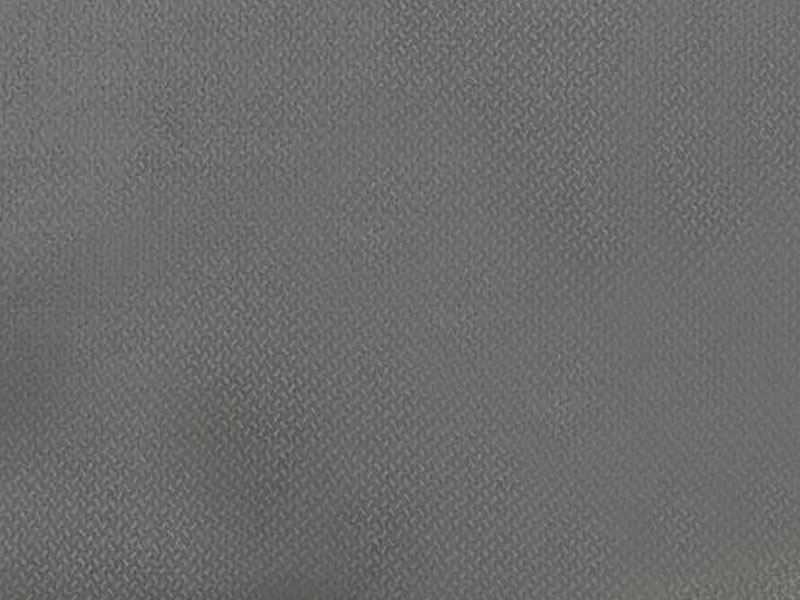 EF002 Four-Way Stretch Waterproof and UV Protection Golf Trousers FabricThis lightweight polyester-spandex blend offers four-way stretch, water resistance, and UV protection in one cloth, making it a practical base for golf trousers designed for comfort and all-day outdoor wear.View Product →
For stretch-first performance wear, our polyester four-way stretch series relies on a different philosophy: elasticity comes from the weave geometry as much as from the spandex content. The AB015 mountaineering fabric in this series adds an antibacterial finish on top of its cross-stretch structure, making it a practical base for versions that need movement and hygiene.
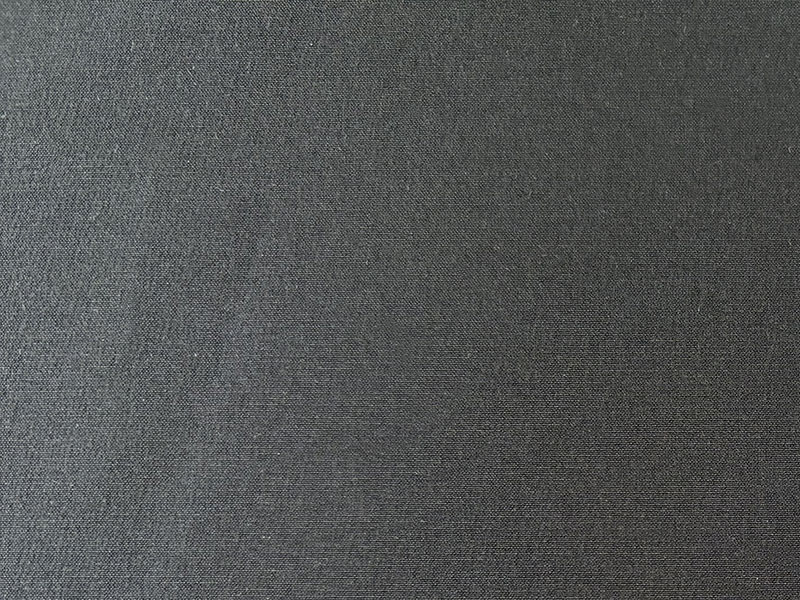 AB015 Polyester Stretch Mountaineering Fabric with Cross-Stretch Antibacterial FinishA wicking, antibacterial mountaineering fabric with cross-stretch structure and spandex content, suited for performance wear that requires both freedom of movement and hygiene during extended activity.View Product →
Sample Development, Testing, and Bulk Delivery Timeline
A typical custom development cycle runs 21 to 35 days from specification approval to production-ready fabric, not counting air or sea transit. The largest block is bulk production, which usually takes 15 to 25 days depending on construction and finishing route.
| Stage | Typical duration | Key deliverable |
| Specification confirmation | 1-2 days | Approved specification sheet |
| Sample development | 7-10 days | 10-30 meters of trial yardage |
| Customer approval | 3-5 days | Signed-off sealed sample |
| Bulk production | 15-25 days | Finished rolls with QC report |
Every lot is lab-tested before shipment. Standard checks include tensile strength, tear strength, color fastness to washing and light, dimensional stability, and, when specified, water repellency or UPF rating. You receive the test report together with the finished goods.
Custom Fabric Development: Frequently Asked Questions
What is the minimum order quantity for a custom fabric development project?
At the development stage, we typically weave 10-30 meters of trial yardage so you can evaluate hand feel, drape, and color. For bulk orders, the starting point depends on the weave complexity and the finishing route; a four-way stretch polyester style can start from a lower quantity than a complex double-weave construction. We confirm a realistic minimum after reviewing your specification.
Can you develop a fabric from a photo or a design sketch?
Yes. If you send a physical sample, we reverse-engineer the yarn count, construction, and finishing recipe. If you send only a photo or sketch, our R&D team drafts the weave structure from scratch. In either case, we agree on the target parameters in writing before weaving begins.
How many revision rounds are included in fabric development?
We normally include two revision rounds after the first development sample. The first round refines the weave structure and hand feel; the second round dials in color, shade, and functional finish. Any additional rounds are quoted up front, so the cost of iteration is always visible.
How long does the complete process take from brief to delivery?
A realistic schedule is 21 to 35 days from specification approval to production-ready fabric, plus transit. We issue a dated production schedule before sampling starts, and each milestone is tracked against it. If your timeline is shorter, contact us early; we can sometimes compress the sampling stage by using an approved base structure.
Have a design requirement ready? Send your drawings, samples, or performance targets to our sales and development team, and we will confirm what is achievable, what it costs, and how soon we can start.


.png)


