
 English
 中文简体
中文简体Content
- 1 What Hydrophilic and Hydrophobic Actually Mean in Performance Fabrics
- 2 How Moisture Management Affects Comfort in High-Intensity Sports Apparel
- 3 Hydrophilic Fabrics: Wicking and Quick-Dry for Sweat Management
- 4 Hydrophobic Fabrics: Water Repellency and Weather Protection
- 5 Choosing the Right Moisture Management Strategy for Your Apparel Line
- 6 Frequently Asked Questions
During the final 10 kilometers of a marathon when the temperature climbs past 30 degrees C and humidity sits above 70 percent, comfort is not a luxury - it is a performance variable. The fabric between the skin and the environment determines whether sweat evaporates or pools, and that single physiological effect decides how a runner feels in the last mile. For apparel brands engineering high-intensity sportswear, the choice between hydrophilic and hydrophobic fabric is the foundational specification that shapes everything else.
Green Textile & Galaxy Textile Co., Ltd., a performance fabric manufacturer operating from Wujiang since 2006, has developed chemical-fiber woven fabrics that address this exact problem, with dedicated product lines for running, hiking, and outdoor apparel.
What Hydrophilic and Hydrophobic Actually Mean in Performance Fabrics
Hydrophilic and hydrophobic describe chemical behavior between water and the fabric surface - they are not marketing labels.
Hydrophilic means water-attracting. A hydrophilic fabric absorbs sweat through capillary action, spreading it across the fiber surface so it can evaporate faster. Hydrophobic means water-repelling. A hydrophobic fabric has a surface with a water contact angle above 90 degrees, which causes moisture to bead and roll off instead of soaking in.
Most synthetic performance fabrics begin life as hydrophobic polyester or nylon because these fibers are durable and lightweight. Weavers and textile finishers then apply hydrophilic finishes or engineer the fiber cross-section to change how moisture interacts with the fabric. The result is that performance fabrics exist along a spectrum, not in two boxes.
| Property | Hydrophilic treatment | Untreated hydrophobic |
| Water contact angle | Under 90 degrees | Over 90 degrees |
| Wicking rate | High | Low |
| Drying time | Fast | Slow |
| Next-to-skin feel | Dry and cool | Damp and clammy |
| Primary strength | Sweat management | Weather resistance |
How Moisture Management Affects Comfort in High-Intensity Sports Apparel
High-intensity sportswear depends on moisture transport because the human body sheds heat through sweat.
When you run, ride, or climb at anaerobic threshold, the body produces roughly 1.5 to 2 liters of sweat per hour. The thermoregulatory system assumes this sweat will evaporate from the skin surface or move into the clothing layer. A hydrophilic fabric moves that moisture outward quickly, allowing evaporation to complete its cooling job. A hydrophobic fabric resists wetting, slows transport, and leaves sweat pooled against the skin.
Air permeability plays a supporting role. A woven fabric with 25 to 45 liters per square meter per second air flow helps carry vapor away from the microclimate between skin and fabric. But surface chemistry remains the dominant variable. When the fiber resists wetting, the vapor transport path is blocked.
Moisture management performance index by fabric type
Higher index indicates faster drying performance.
Hydrophilic Fabrics: Wicking and Quick-Dry for Sweat Management
For sweat-heavy activities, hydrophilic polyester and nylon four-way stretch fabrics offer the most dependable next-to-skin comfort.
Hydrophilic finishing changes the fabric surface to reduce surface tension, allowing water to spread rather than bead. This activates the wicking mechanism. Once sweat spreads into a thin film across the fiber, it evaporates faster and the fabric dries quickly.
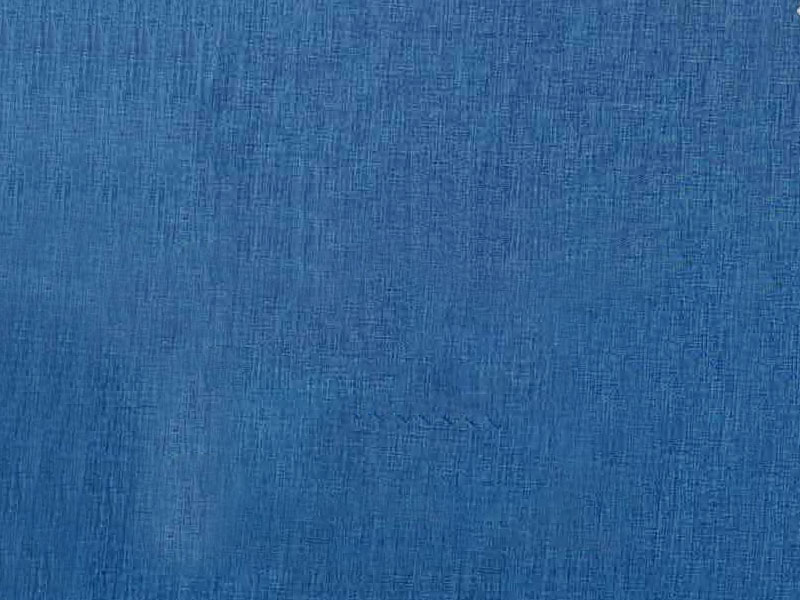 LP139 Wicking Breathable UV Protection Running Jogger FabricThis lightweight woven fabric with four-way stretch combines wicking, breathability, and UV protection, making it ideal for high-output running apparel where moisture management and comfort are key.View Product →
Green Textile & Galaxy Textile engineers this behavior into products across the running and training categories. Its running jogger fabric LP139, for example, combines wicking, breathable structure, and UV protection in a lightweight woven construction, making it suited to high-output running apparel.
Hydrophilic finishing works best when combined with open weaves and low denier yarns. A 75D polyester filament with moderate picks per inch creates the capillary spaces needed for fast wicking. In contrast, a tightly packed fabric with high pick density restricts water movement.
See this guide to choosing the best light running jogger fabric for more detail on fabric selection.
In one internal fabric trial, a hydrophilic-treated 75D woven polyester reached 50 percent moisture loss in 15 minutes, while an untreated hydrophobic weave took 35 minutes - a 133 percent faster drying rate.
Hydrophobic Fabrics: Water Repellency and Weather Protection
When the garment faces rain or wind instead of body heat, hydrophobic behavior becomes the priority.
Hydrophobic fabric rejects water. A durable water-repellent surface keeps rain droplets from penetrating while the weave maintains breathability. In this context, the fabric is not trying to manage sweat; it is protecting the wearer from external moisture.
Green Textile & Galaxy Textile's sport rain jacket fabric EP101 combines four-way stretch with a water-repellent finish. This construction is engineered for athletes who need weather protection with unrestricted mobility.With water contact angles above 140 degrees in an applied repellent finish, a hydrophobic fabric lets rain bead and roll off. At the same time, the woven structure retains air permeability so that heat generated during a hard climb can escape.
Hydrophobic fabric is not anti-sweat. It is anti-rain. Matching the surface behavior to the garment layer is what prevents athlete discomfort.
Choosing the Right Moisture Management Strategy for Your Apparel Line
Your most comfortable sportswear line will combine both fabric types, with hydrophilic fabrics in next-to-skin layers and hydrophobic fabrics in weather-facing shells.
Three decision criteria clarify the choice: what the athlete is doing, what the environment looks like, and where the garment sits in the layering system.
Recommended treatment: hydrophilic wicking finish
Recommended treatment: hydrophobic repellent finish
High-intensity sportswear in humid environments, where evaporation is naturally limited, needs aggressively hydrophilic fabric. In cold and wet conditions, hydrophobic outer layers with breathable backings are the better choice.
The supply chain matters. Green Textile & Galaxy Textile's production base in Wujiang spans over 6,000 square meters with 280 hydraulic looms and an annual capacity of 16 million meters. The company produces chemical-fiber woven fabrics with a full range of functional finishes, so apparel brands can source both hydrophilic and hydrophobic technologies from a single factory.
- Hydrophilic finishes degrade with repeated washing. Ask suppliers for wash-durable wicking performance evaluated at 20 or 30 industrial wash cycles.
- DWR coatings on hydrophobic fabrics wear off over time. Specify an abrasion-resistant or PFC-free treatment and validate with a spray test.
- Fabric weight above 200 g/m2 reduces moisture transport efficiency. For high-intensity baselayers, keep woven fabric in the 70-120 g/m2 range.
 EP215 Quick-Dry Lightweight Easy-Care Running Jacket FabricThis all-way stretch nylon fabric provides quick-dry, lightweight, and easy-care performance with a soft handle, suited for running jackets that require comfort and functionality.View Product →
On the running side, Green Textile & Galaxy Textile's EP215 running jacket fabric delivers quick-dry, lightweight, easy-care performance with a soft handle for athletic use.
Product developers should also consider abrasion resistance. A hydrophilic finish that withstands 10,000 Martindale rubs preserves comfort through extended use. For climbing and hiking applications, combine wicking behavior with tear-resistant weaves to avoid performance loss in harsh terrain.
Learn more about the production base and its finishing capabilities.
Frequently Asked Questions
Can a fabric be both hydrophilic and hydrophobic?
Not on the same surface. A finish that attracts water and a finish that repels water cancel each other. But a garment can layer both, and some engineered weaves use a hydrophilic inner face with a hydrophobic outer face. In practice, most brands build this into the garment structure rather than into a single fabric.
How should I evaluate a supplier's hydrophilic finish?
Run a wicking test in your own lab. Cut a 5 cm by 20 cm strip, suspend it vertically, and measure the water rise over 5 minutes. A functional hydrophilic fabric rises 7 to 10 cm. Also ask about finishing durability - hydrophilic polymers often need a crosslinking binder to survive industrial laundering.
What fabric weight works best for high-intensity sportswear?
For woven chemical-fiber fabrics, stay between 70 and 120 g/m2 for moving layers. Below 70 g/m2, the fabric is too transparent and fragile. Above 120 g/m2, moisture transport drops because water must travel through more fiber bulk.
Does breathability matter more than hydrophilicity?
They work together. Breathability determines how much vapor can escape from the microclimate. Hydrophilicity determines how quickly liquid sweat is absorbed and transported. A fabric with high breathability but no wicking action leaves sweat pooling on the skin, while a wicking fabric with no breathability traps humidity.





.png)


