
 English
 中文简体
中文简体Content
- 1 What Makes a Fabric Performance Grade for Activewear?
- 2 How to Choose the Right Performance Fabric Fiber for Activewear
- 3 Performance Fabric Properties Your Activewear Line Needs in the Specification
- 4 Woven or Knit: Choosing the Right Performance Fabric Construction for Activewear
- 5 How to Qualify a Performance Fabric Supplier for Your Activewear Line
- 6 Frequently Asked Questions
Your first production run of hiking pants came back from wear testing with seam slippage at the hip pocket and a moisture-management score below the quality bar you set for launch. The mill swatch felt right in the showroom - soft, lightweight, convincing - but the fabric was never engineered for the abrasion and sweat load of real trail use. Choosing the right performance fabric for your activewear line means matching fiber chemistry, weave construction, and functional finishes to the stress profile of each garment, not just picking the most attractive sample in the book.
Brands that avoid this failure treat fabric selection as a specification exercise. Every yard of fabric they order has a measurable target: a wicking test result, a UPF rating, an abrasion cycle count, a stretch-recovery percentage. The sections below walk through those targets, explain how polyester and nylon differ in practice, and show where woven construction earns its place in an activewear line.
What Makes a Fabric Performance Grade for Activewear?
A performance fabric is a textile engineered through controlled fiber selection, weave construction, and functional finishing to deliver measurable outcomes - moisture transfer, stretch recovery, UV protection, and tear resistance - under repeated physical stress.
Most product teams evaluate hand feel first and data second, and that order produces most of the failures in activewear sourcing. A soft hand feel is easy to achieve with loose construction or heavy softeners, both of which hurt durability. The fabrics that survive field use have documented thresholds behind them.
Before you request yardage, ask the mill to confirm these five measurable properties:
- Moisture management: vertical wicking of 80 mm in 10 minutes or faster on a strip wicking test.
- Stretch and recovery: fabric elongation of 15-25% with residual elongation below 5% after repeated extension.
- Abrasion resistance: Martindale results above 20,000 cycles for pants, shorts, and climbing layers.
- Tear strength: trapezoid tear values of 30-60 N for lightweight running pieces and 80 N or more for shells.
- UV protection: UPF 50+ blocks 97-98% of UVB and roughly 96% of UVA when tested on the fabric in its final color.
How to Choose the Right Performance Fabric Fiber for Activewear
Polyester and nylon dominate activewear because both are synthetic, quick-drying, and easy to engineer; the practical difference appears in abrasion toughness, UV behavior, hand feel, and cost.
For running shorts, joggers, and warm-weather layers, polyester with 5-10% spandex gives the best balance of wicking speed, cost, and moisture management. Nylon moves ahead where abrasion and tear resistance dominate the decision - climbing shells, technical hiking pants, or anything that drags against rock and brush. The blend ratio settles the rest: below 5% spandex, stretch recovery is weak; above 15%, pressure discomfort and material cost begin to climb.
| Property | Polyester | Nylon | Polyester-Spandex |
| Moisture wicking | Excellent | Good | Excellent |
| Abrasion resistance | Good | Excellent | Good |
| UV resistance | Very good | Moderate | Very good |
| Hand feel | Crisp, lightweight | Softer, slightly heavier | Balanced |
| Typical cost | Lower | Higher | Mid |
| Best fit | Running, layering | Climbing, heavy-duty pants | Most activewear categories |
Values are directional ratings for selection purposes; final performance depends on yarn count, weave density, and finishing chemistry.
Polyester-based stretch wovens also support add-on functions without losing their cost advantage. An example is the AB015 polyester stretch mountaineering fabric from Green Textile & Galaxy Textile Co., Ltd., which pairs cross-stretch construction with an antibacterial finish for long-session wear.
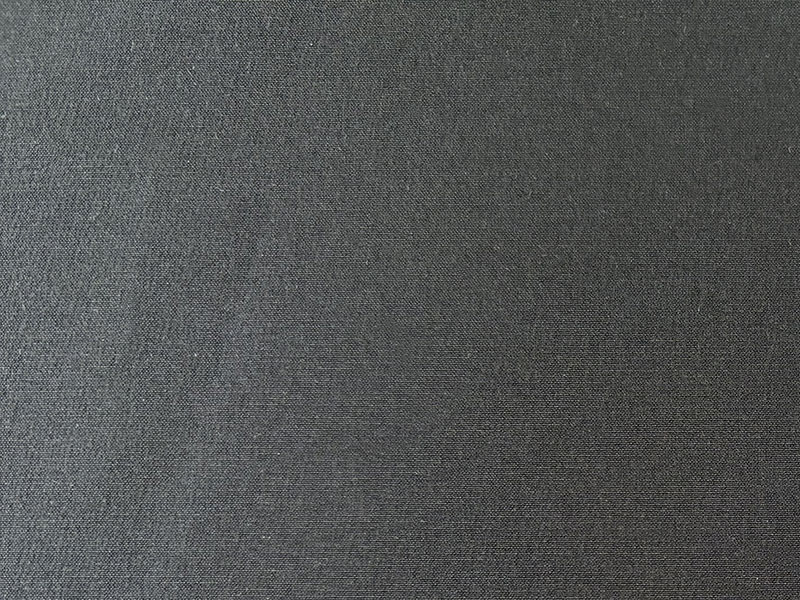 AB015 Polyester Stretch Mountaineering Fabric with Antibacterial FinishThis woven mountaineering fabric combines cross-stretch construction with an antibacterial finish, making it suitable for long-session wear where durability and hygiene matter.View Product →
Performance Fabric Properties Your Activewear Line Needs in the Specification
Functional properties only matter when they are attached to a number; an unquantified quick-dry claim is a specification gap, not a feature.
Write each property with its test method and threshold. For moisture wicking, request vertical wicking in millimeters per 10 minutes and drying time under controlled humidity. For UV claims, ask for UPF tested on the finished garment color, not the greige fabric, because dyes and finishes shift the result. For water resistance, specify a water-column pressure: 3,000-5,000 mm for light showers and 8,000-10,000 mm for extended rain exposure.
Relative performance scores of polyester versus nylon across four selection criteria (illustrative, 0-100 scale)
Chart data: directional comparison based on typical mill performance for 75D-150D woven fabrics.
For running wear, the critical pairing is stretch plus protection. The DE05 running jogger fabric from the same mill combines four-way stretch, skin-friendly construction, and UV protection in one woven fabric, which removes the need to coordinate separate stretch and UV suppliers in the supply chain.
 DE05 4-Way Stretch Skin-Friendly UV Protection Running Jogger FabricA lightweight woven fabric offering four-way stretch, skin-friendly comfort, and UV protection in one material, simplifying supply coordination for running apparel.View Product →
Woven or Knit: Choosing the Right Performance Fabric Construction for Activewear
Woven fabrics provide the dimensional stability and tear strength that structured activewear demands; knits offer comfort and conformability but sacrifice durability and can lose shape through repeated washing.
Woven with elastane
- Stable stretch in warp and weft directions
- High tear strength and abrasion resistance
- Crisp drape that holds garment structure
- Requires 5-15% spandex for four-way stretch
- Ideal for pants, shorts, shells, and structured jackets
Knit
- Flexible and body-conforming
- Excellent next-to-skin comfort
- Lighter weight per square meter
- Lower tear strength and shape retention
- Best for base layers and low-abrasion tops
A dedicated performance pant fabric range gives you base constructions with verified stretch and recovery across joggers, hiking, and golf silhouettes, which removes the risk of mixing suppliers with inconsistent tolerances within one season.
A reliable test of construction maturity is whether one mill can combine several functions in a single woven structure. The EF002 golf pants fabric, for example, carries four-way stretch, water resistance, and UV protection in one warp-prepared construction, which shortens your development calendar and reduces approved-vendor complexity.
 EF002 4-Way Stretch Waterproof UV Protection Golf Pants FabricA single woven construction that integrates four-way stretch, water resistance, and UV protection, reducing development time and vendor complexity for golf pants.View Product →
How to Qualify a Performance Fabric Supplier for Your Activewear Line
A mill that weaves and finishes in-house can hold tolerances that a trading agent cannot guarantee, because every process step stays under one quality team.
- Request lab reports per batch: UPF, water column, wicking, tear strength, and dimensional stability after laundering.
- Order sample yardage in the actual colorway, because dye chemistry changes UV and moisture behavior.
- Confirm MOQ and lead time against your seasonal calendar; a mill with high annual capacity can absorb volume spikes without pushing your dates.
- Ask for customization experience. The ability to develop from a drawing or reference sample indicates real engineering depth, not order taking.
A factory review, on-site or virtual, should cover three things: loom park condition, finishing line capacity, and the lab equipment used for performance testing. When the supplier's own lab mirrors the test standards your brand uses, the handoff from development to bulk runs cleanly.
Frequently Asked Questions
What is the best performance fabric for activewear?
For most activewear lines, a polyester-spandex woven with 5-10% spandex gives the strongest combination of wicking, quick-dry behavior, stretch recovery, and cost. Specify nylon-spandex where abrasion resistance is the critical driver, such as climbing outer layers or heavy trail pants.
How do I verify a mill's moisture-wicking claim?
Request a vertical wicking test report in millimeters per 10 minutes and a drying-time measurement under standard humidity. A fabric that wicks 80 mm in 10 minutes and dries within 30 minutes is a defensible baseline for performance running wear.
What is the difference between UPF 40 and UPF 50?
UPF 40 permits roughly 2.5% of UVB through the fabric; UPF 50 permits about 2%. UPF 50+ is the threshold for the "excellent protection" category under the AS/NZS 4399 standard and the safest target for outdoor garments.
How much spandex should performance pants contain?
Between 5% and 15%, depending on the activity. Below 5%, stretch recovery is weak; above 15%, pressure discomfort and material cost rise. A 75D polyester with around 10% spandex is a proven starting point for joggers and trail pants.



.png)


